ALL ABOUT KINGDOM OF BHUTAN
In Bhutan way of everyday life and is often known as “The Last Shangri-la”. Welcome to Bhutan – the happiest place on Earth! Famous for its concept of Gross National Happiness, Bhutan is the best place
to visit when you want to break away from the monotony of a hectic, stressful lifestyle. Be it the beauty of the spectacular Himalayas and wide landscapes dotted with rice-fields or the magnificent architecture of age-old monasteries and houses, Bhutan is a treat for your eyes, mind, body and soul.
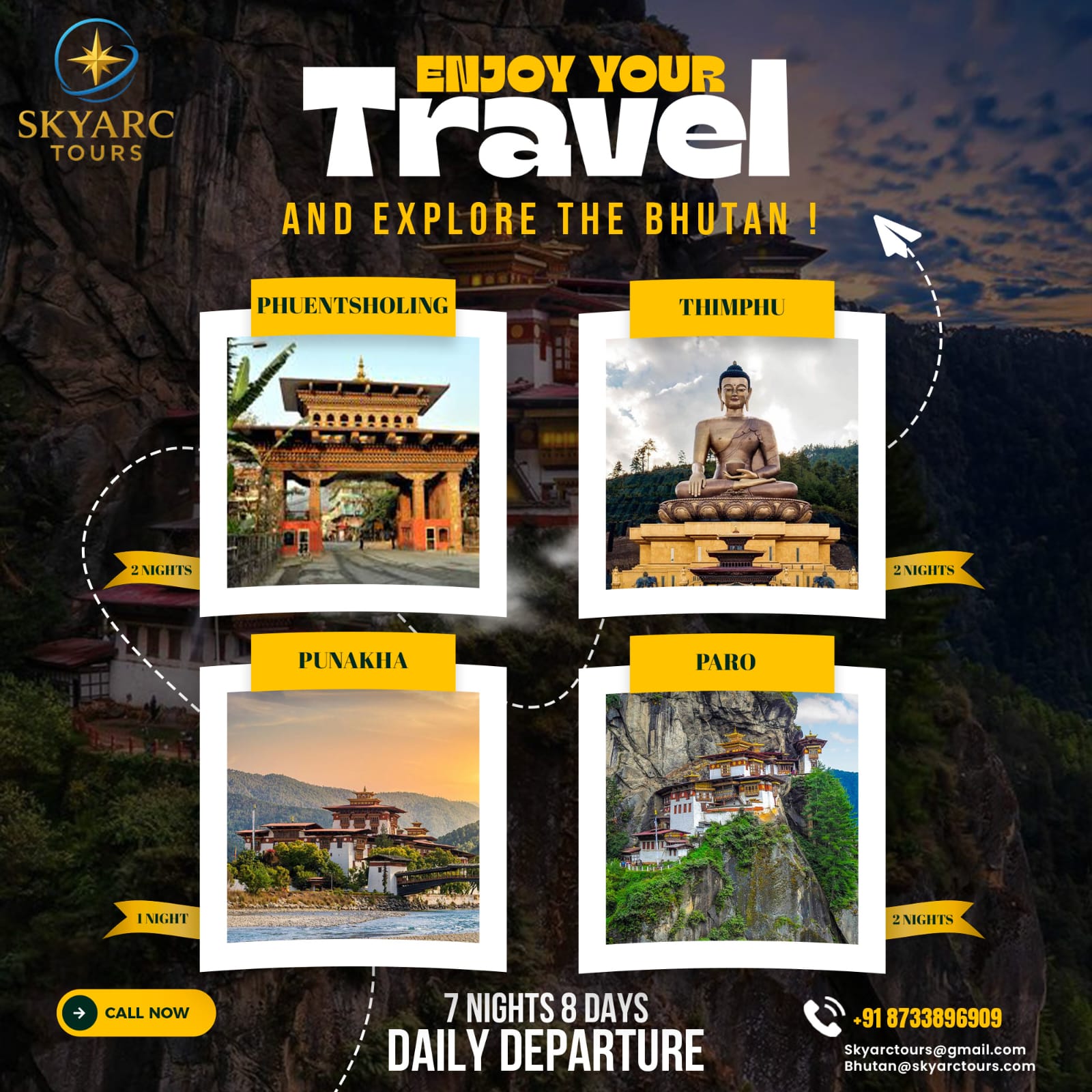
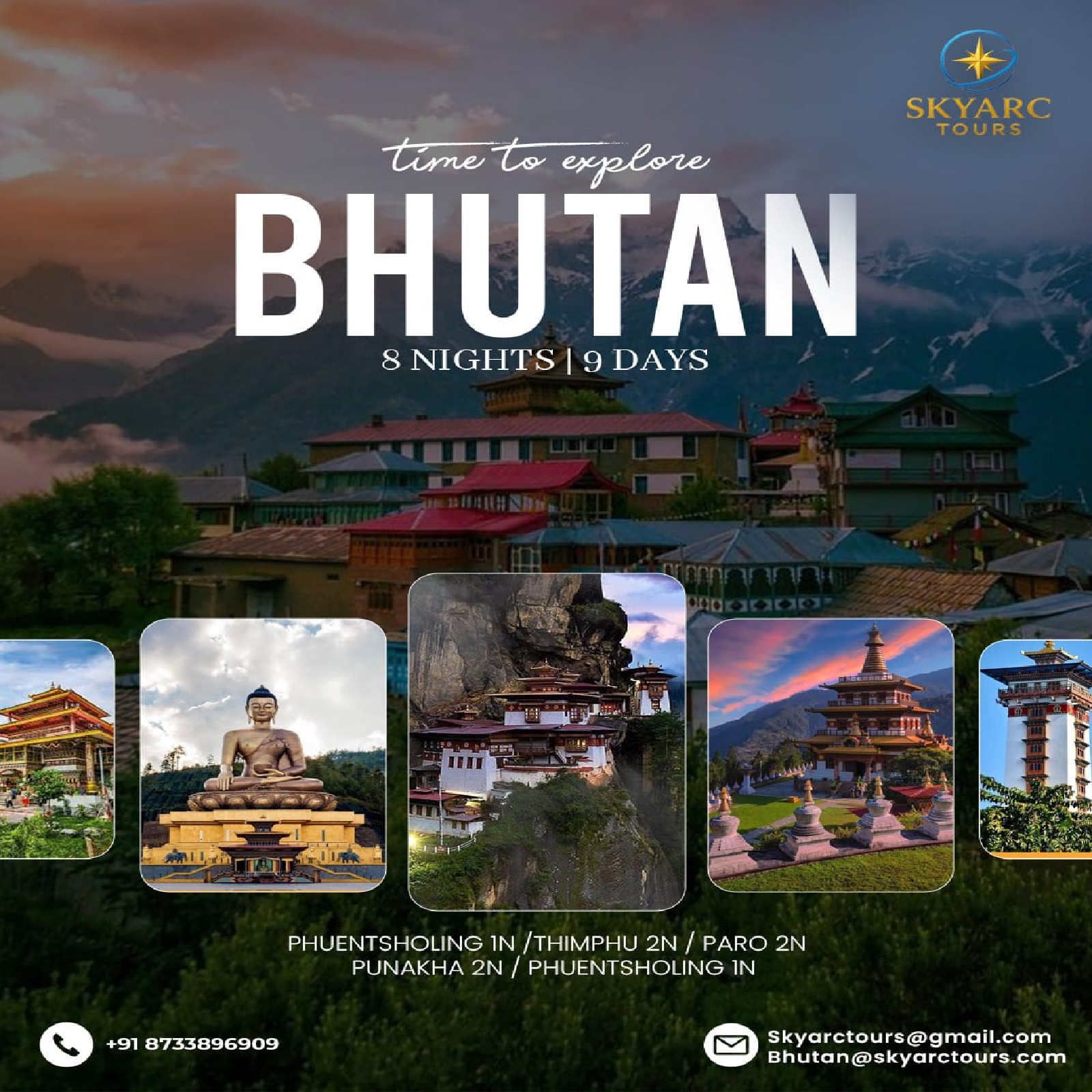
The two main cities are Thimphu, the capital city and Paro, the city with only international airport in the country. The other important city is Phuentsholing which is an Indo-Bhutan border town and is one of the entry points to Bhutan by surface from India.
Best time to travel: Bhutan has four distinct seasons - spring, summer, autumn and winter. Spring and autumn are the best time to visit Bhutan i.e. end of February till end of March and September to November. If you love flowers, you will get plenty of them in May, June and July. November, December, January and February will be blessed with breath taking mountain views, sunny days and the morning/evening chills.
National Emblem: The National emblem, contained in a circle, is composed of a double diamond thunderbolt placed above a lotus, surmounted by a jewel & framed by two dragons. The double diamond thunderbolt represents the harmony between secular & religious power; which results from the Buddhist religion in its Vajrayana form. The lotus symbolizes purity; the jewel - sovereign power; & the two dragons a male & female stand for the name of the country-the thunder dragon (Druk Yul).
National Flag: The national flag is rectangular & divided into two parts with a white dragon in the middle. The upper yellow half signifies the country’s secular authority of the King & the lower saffron-orange half signifies the religious practice & spiritual power of Buddhism.
People: Bhutanese are friendly & hospitable people. The large majority of Bhutanese people are a homogeneous group divided linguistically into three broad sub-groups. These are Sharchops, Ngalong & Lhotshampa.
Food: Staple diet is red rice, buck-wheat, wheat, maize, chicken, yak meat, cheese & chilies (taken as vegetable – not as spice)
Arts & Crafts: Bhutan is known for handicraft items in bronze, silver & other metals. Sculpting of religious figures is widely practiced & every temple, houses are large brightly painted & gilded statues of the Buddha & other saints.
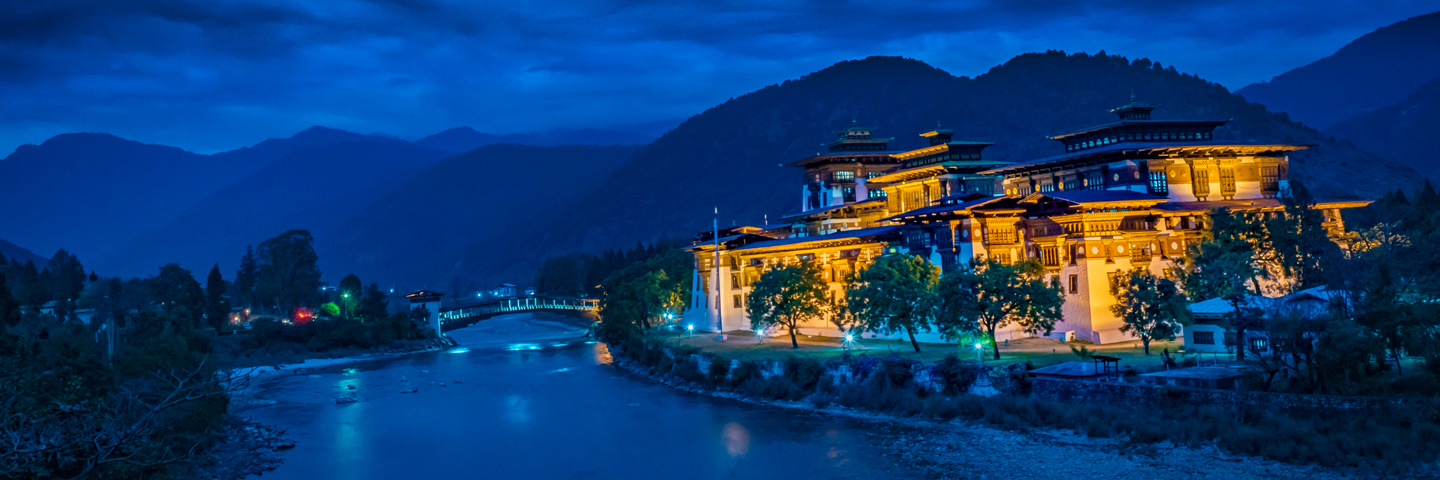
Architecture: The castle-like Dzongs, with their gently tapering walls classic lines, large courtyards & beautiful galleries, are among the finest examples of Bhutanese architecture
Living Culture: In almost every Dzongs (fortresses (Kila) that house both the monastic & the Govt. administrative wings) there is an annual traditional festival (tsechus) that normally spans 3-4 days. Colorful &well-choreographed mask dances are performed during the tsechus. Due to the nature of the lunar calendar, exact dates for tsechus vary from year to year.
Living Culture: In almost every Dzongs (fortresses (Kila) that house both the monastic & the Govt. administrative wings) there is an annual traditional festival (tsechus) that normally spans 3-4 days. Colorful &well-choreographed mask dances are performed during the tsechus. Due to the nature of the lunar calendar, exact dates for tsechus vary from year to year.

 Mail Support bhutan@skyarctours.com
 More Inquery +918733896909